
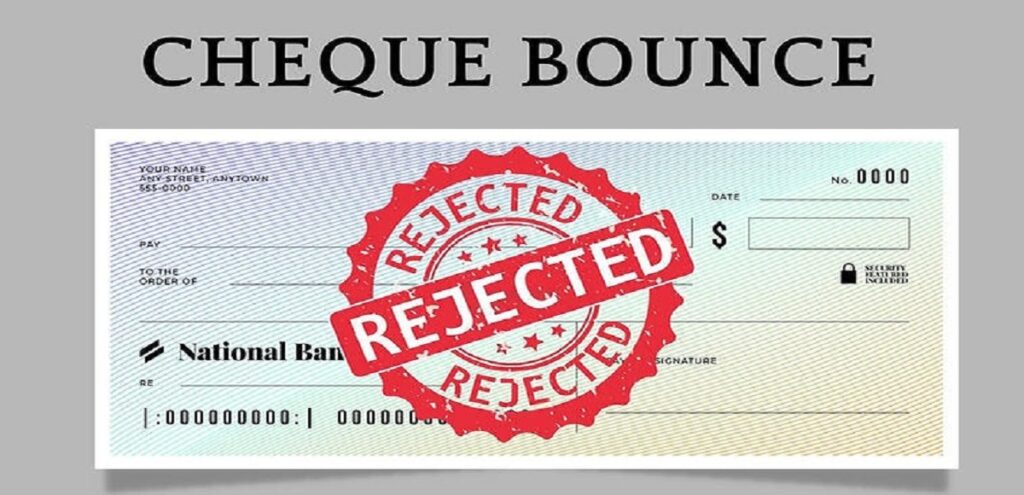
A cheque is a widely used financial instrument for making payments. However, when a cheque is dishonored due to insufficient funds or other reasons, it leads to what is commonly known as cheque bounce. This can have serious financial and legal implications for both the issuer and the payee.
Causes of Cheque Bounce
There are several reasons why a cheque may bounce:
- Insufficient Funds – The most common reason for cheque dishonor.
- Signature Mismatch – If the signature on the cheque does not match the bank records.
- Post-Dated Cheque – Presenting a cheque before its due date.
- Account Closed – If the drawer’s bank account has been closed.
- Wrong Payee Name – An incorrect or misspelled name can lead to dishonor.
- Overwriting or Damage – If a cheque has excessive overwriting or is damaged.
- Mismatch in Figures and Words – The amount in numbers and words should be the same.
- Stop Payment Instructions – If the drawer has issued stop payment instructions to the bank.
Consequences of Cheque Bounce
The consequences of a bounced cheque can be financial, legal, and reputational:
- Penalty Charges – Banks impose penalty fees on both the issuer and the payee.
- Legal Consequences – Under Section 138 of the Negotiable Instruments Act, 1881, cheque bounce can lead to legal action.
- Criminal Proceedings – If convicted, the issuer can face imprisonment of up to two years or a fine up to twice the cheque amount.
- Credit Score Impact – Repeated cheque bounces can negatively affect the issuer’s creditworthiness.
- Business and Reputation Damage – Frequent cheque dishonor can lead to loss of trust and credibility in business dealings.
Legal Remedies for the Payee
If a cheque is dishonored, the payee can take legal action by following these steps:
- Demand Notice – A legal notice must be sent to the issuer within 30 days of cheque bounce.
- Filing a Complaint – If the issuer fails to make the payment within 15 days of receiving the notice, a case can be filed in court.
- Criminal Proceedings – If the court finds the issuer guilty, penalties such as fines or imprisonment can be imposed.
- Civil Suit for Recovery – The payee can also file a civil suit to recover the cheque amount along with interest.
Preventive Measures
To avoid cheque bounce, consider the following precautions:
- Ensure Sufficient Balance – Keep enough funds in the account before issuing a cheque.
- Double-Check Details – Verify all details, including the payee name and amount, before issuing a cheque.
- Use Digital Payments – Online transfers reduce the risk of cheque dishonor.
- Communicate with the Payee – Inform the payee if there is a risk of cheque dishonor and arrange alternative payment methods.
Conclusion
A cheque bounce can have serious financial and legal consequences. Both issuers and payees must be aware of their rights and responsibilities. Taking preventive measures and understanding legal remedies can help in avoiding unnecessary legal troubles and financial losses.
